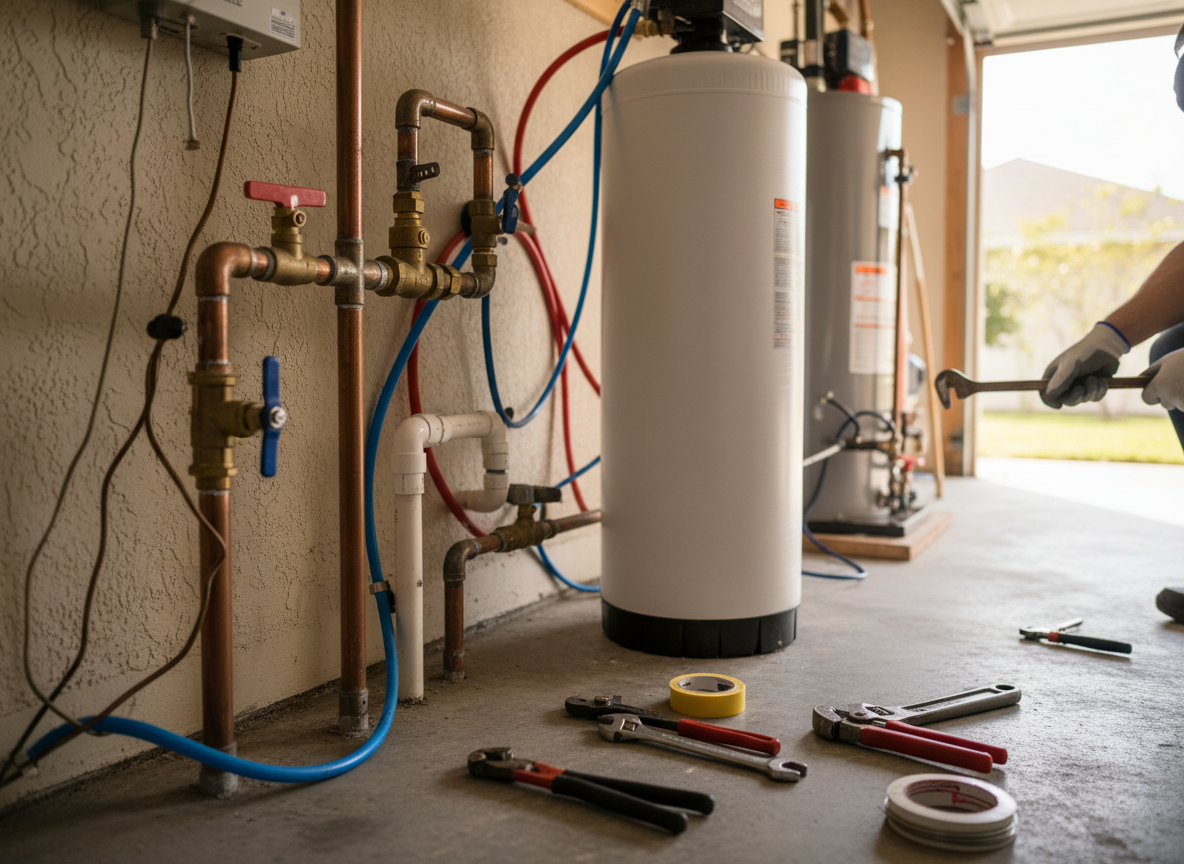
Water softener installation begins with testing the incoming water supply to measure hardness levels common in Orange County. The plumber evaluates existing pipe materials such as CPVC, PEX, copper or older polybutylene lines found in many 1980s and 1990s slab-on-grade homes. Equipment selection focuses on capacity suited to household size and whether the property draws from a private well, which often carries higher mineral content. Sandy soil conditions around foundations require careful excavation and support to avoid future pipe stress during placement of the resin tank and brine tank.
Installation typically involves shutting off the main water line near the point of entry, cutting into the supply pipe, and adding bypass valves so untreated water remains available during maintenance. Connections are made with appropriate fittings for the pipe type present, followed by placement of the control valve and programming for regeneration cycles. In humid subtropical conditions with frequent afternoon thunderstorms, outdoor tank locations need secure anchoring against wind and proper drainage to prevent standing water near the slab. Final flushing removes any residual media before returning the system to service.
Homeowners with polybutylene piping receive extra warnings because the material can become brittle over time and requires gentle handling during any cut-in work. The plumber also checks for adequate space in utility areas common to Florida homes and confirms electrical access for the control head. Proper venting and overflow routing prevent brine spills that could affect sandy soil stability around the foundation. These steps address scale buildup on fixtures and appliances while protecting the integrity of the existing plumbing.
Technician insight
In Orlando, the thing that catches most people out with Water Softener Installation is sandy soil shifting around slab-on-grade foundations in older neighborhoods, which can stress new connections if the plumber does not add proper support during the cut-in on CPVC or polybutylene lines.
Water Softener Installation Services We Offer
✓Whole House Water Softener Installation
Connects a central softener unit to the main supply line to treat all water entering the home and reduce scale on pipes and appliances.
✓Private Well Water Softener Installation
Matches softener capacity and resin type to higher mineral loads typical of private wells serving homes in Orange County.
✓Slab-On-Grade Home Softener Placement
Positions tanks and routes piping with extra support in sandy soil conditions common under Florida slab foundations.
✓Polybutylene Pipe Softener Integration
Uses compatible fittings and minimal stress methods when tying a new softener into older polybutylene lines found in many local homes.
✓Compact Water Softener Installation
Fits smaller capacity units into utility closets or garages typical of homes in Winter Park and Altamonte Springs.
How it works
- 1
Initial Assessment
The plumber tests water hardness and inspects pipe materials, home layout and well or municipal supply at the Orlando-area property.
- 2
Equipment Selection
Appropriate tank size and valve type are chosen based on household demand and existing plumbing conditions.
- 3
Installation And Connection
The unit is placed, piped in with bypass valves, and wired for the control head while protecting surrounding sandy soil and slab.
- 4
Testing And Handover
The system is flushed, programmed for local water conditions and demonstrated to the homeowner.
Pricing
Pricing depends on the job and is discussed with the plumber after you call.