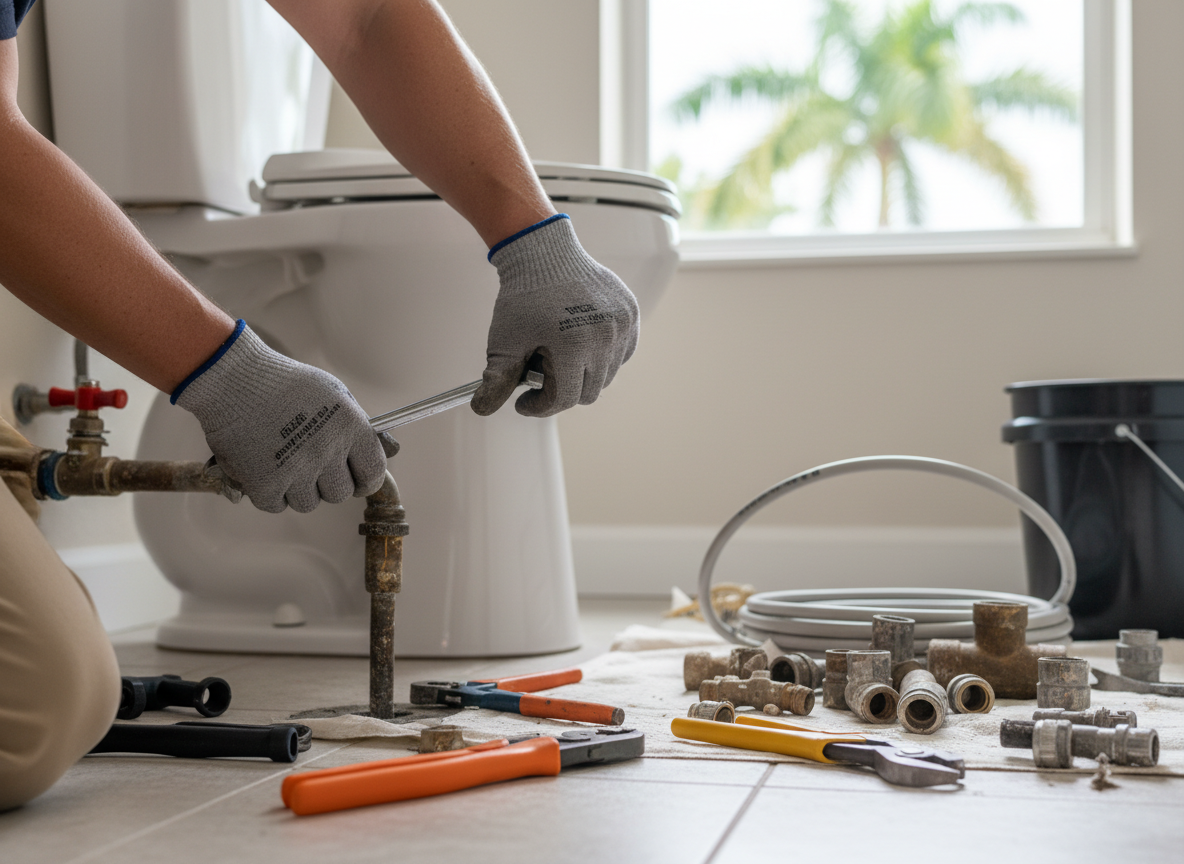
Toilet repairs in Orange County often start with isolating whether the issue stems from the fill valve, flush valve, or supply line pressure. Plumbers inspect the tank and bowl for leaks, then test water flow from the shutoff valve. In homes built on slab foundations, they check for hidden supply line damage caused by shifting sandy soil. Common pipe materials include CPVC, PEX, copper, and older polybutylene lines from the 1980s and 1990s that can restrict flow when scale builds up from hard water.
Equipment typically includes a basin wrench, adjustable pliers, replacement valves, and a pressure gauge to measure incoming supply. When private wells serve the property, technicians also evaluate pump output and pressure tank settings because low pressure frequently prevents the tank from refilling properly after flushes. Afternoon thunderstorms can introduce debris into exposed lines, so flushing the supply before reassembly is standard. Slab-on-grade construction means access to underground lines often requires careful excavation to avoid further settlement.
Warnings for local homeowners include avoiding chemical drain cleaners on older polybutylene lines, which can accelerate cracking, and never ignoring a running toilet because constant flow wastes well water and raises electric pump costs. Hard water scale on the fill valve flapper seat is a frequent culprit in Kissimmee and Altamonte Springs homes. Proper diagnosis prevents unnecessary bowl removal when the real problem is upstream pressure loss.
Common Pipe Materials in Central Florida Homes
Local plumbers routinely encounter CPVC, PEX, copper, and polybutylene supply lines. Each material reacts differently to hard water scale and soil movement, so material identification guides the repair approach.
Technician insight
In Orlando the thing that catches most people out with Toilet Repair is sandy soil shifting under slab-on-grade homes. That movement cracks older polybutylene or CPVC lines and drops pressure right at the toilet shutoff. Homeowners often replace the fill valve first when the real restriction is ten feet back in the supply.
Toilet Repair Services We Offer
✓Clogged Toilet Clearing
Removes obstructions from the trapway or drain line so the bowl empties completely on each flush.
✓Fill Valve Replacement
Installs a new fill valve to restore proper tank water level when low pressure or scale prevents refilling.
✓Flush Valve Repair
Replaces the flush valve assembly to stop leaks at the tank bottom and maintain consistent bowl refill.
✓Wax Ring Replacement
Reseals the toilet base to the closet flange, preventing water seepage under slab-on-grade floors.
✓Low Pressure Toilet Troubleshooting
Diagnoses supply line restrictions from polybutylene or scale so the toilet receives adequate flow from the main.
✓Tank Leak Detection
Locates silent leaks between tank and bowl or at the supply connection common in older Winter Park homes.
How it works
- 1
Initial Assessment
The plumber examines the toilet, supply valve, and visible piping to identify the source of the problem.
- 2
Pressure and Material Check
Incoming water pressure is measured and pipe material is identified to determine the correct repair parts.
- 3
Component Repair or Replacement
Faulty valves, seals, or restricted lines are addressed while protecting the slab and surrounding finishes.
- 4
Final Testing
The toilet is flushed multiple times and pressure is rechecked to confirm normal operation.
Pricing
Pricing depends on the job and is discussed with the plumber after you call.