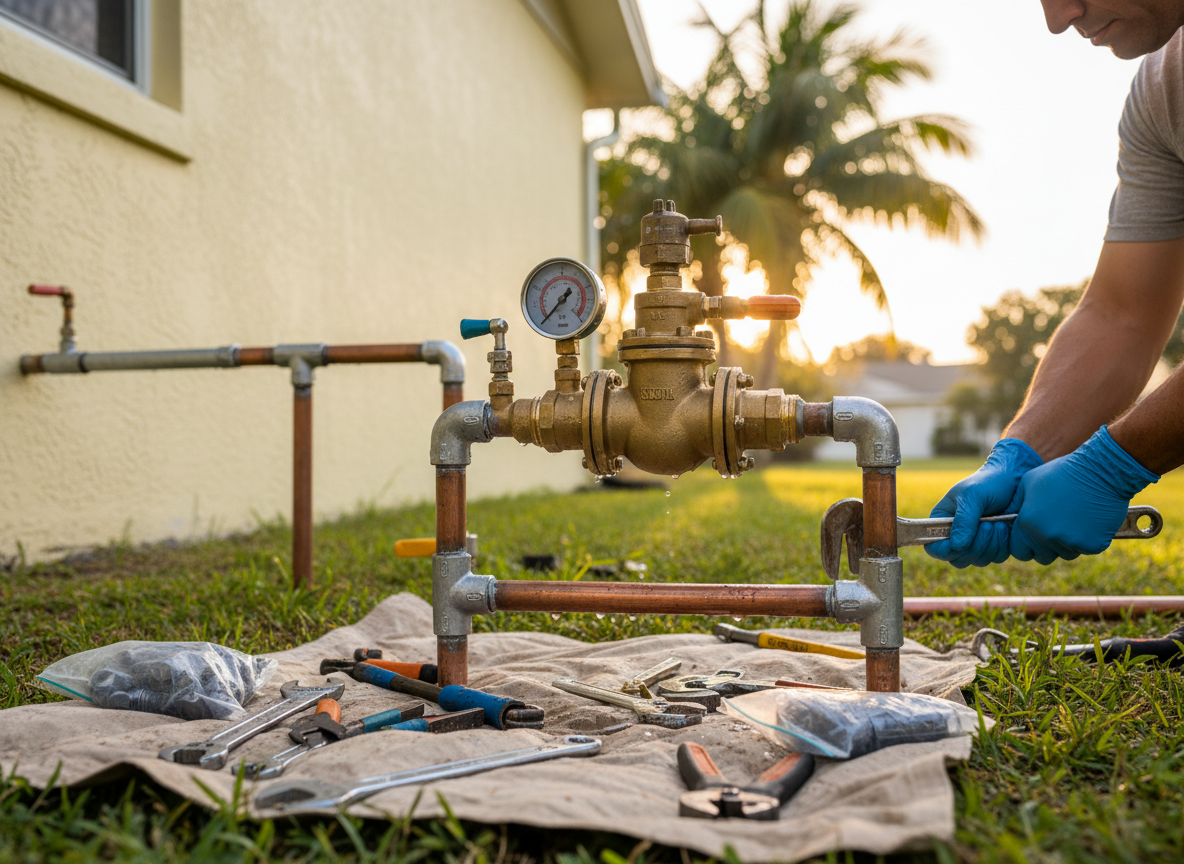
Backflow occurs when pressure drops allow water from irrigation, wells or appliances to flow backward into the main supply. In slab-on-grade homes common across Orlando, sandy soil shifts with frequent afternoon thunderstorms and can stress underground pipes, creating pathways for backflow. Plumbers locate the device near the meter or where the line enters the home, then use a test kit with gauges to check for proper sealing under both static and flowing conditions.
Equipment includes differential pressure gauges, bypass hoses and shutoff tools suited to the pipe materials found locally. Copper remains in many pre-1990 homes, while CPVC and PEX appear in later builds; polybutylene lines from the 1980s and 1990s often need full replacement because they become brittle and leak near backflow assemblies. Hard water scale builds inside valves, so technicians disassemble the unit, remove mineral deposits with approved cleaners, and check check valves and relief ports before reassembly.
Private wells in outlying areas of Orange County add another layer because they lack municipal treatment and can introduce bacteria or chemicals if backflow occurs. Work on these systems requires isolating the well pump, installing or repairing a reduced-pressure zone device, and verifying flow direction. Warnings are posted at hose bibs and irrigation zones until testing confirms the assembly holds pressure in both directions.
Sandy soil and slab construction mean any excavation stays shallow and backfilled with native material to avoid future settling. Technicians avoid aggressive chemicals that could damage nearby landscaping during scale removal.
Technician insight
In Orlando the thing that catches most people out with Backflow Prevention is sandy soil shifting under slab-on-grade homes, which tugs on older polybutylene or copper lines right at the backflow device and creates leaks that only show up after a heavy thunderstorm drops pressure.
Backflow Prevention Services We Offer
✓Backflow Preventer Testing
Annual testing verifies the device maintains separation between irrigation or well water and household supply, preventing pressure loss from reverse flow.
✓Backflow Valve Replacement
Worn check valves or relief valves are swapped on existing assemblies to restore proper direction of flow in homes with older copper or polybutylene lines.
✓Irrigation Backflow Device Installation
New reduced-pressure zone or double-check units are installed at the point where sprinkler lines connect, stopping lawn chemicals from entering the home supply.
✓Polybutylene Pipe Backflow Repair
Brittle 1980s-1990s polybutylene lines near backflow points are cut out and replaced with PEX or CPVC to eliminate leaks that drop household pressure.
✓Well System Backflow Prevention
Private well setups receive dedicated backflow assemblies that protect against untreated water reversing into the house during pressure drops.
✓Hard Water Scale Removal From Backflow Units
Mineral buildup inside valves is cleared so the device can open and close fully, restoring steady pressure in areas with Orange County hard water.
How it works
- 1
Site Evaluation
The plumber inspects the meter location, pipe material, and any visible backflow assembly to identify the cause of pressure loss.
- 2
Isolation and Testing
Water is shut off at the main, the assembly is isolated, and gauge readings confirm whether backflow is occurring.
- 3
Repair or Replacement
Faulty components are cleaned, rebuilt, or exchanged while protecting nearby slab and sandy soil areas from disturbance.
- 4
Verification and Documentation
The system is repressurized and retested to confirm flow direction before the homeowner is notified of results.
Pricing
Pricing depends on the job and is discussed with the plumber after you call.